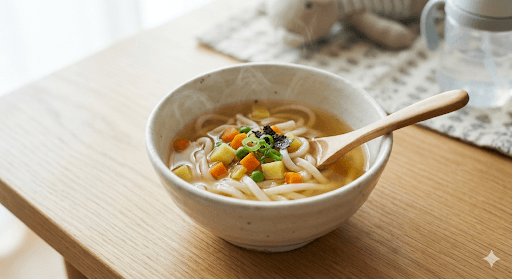
Soft Udon Noodles with Vegetables
Allergen Information
Udon noodles are typically one of the first 'solid' foods Japanese babies graduate to around 9-11 months. The thick, soft wheat noodles are easier for babies to manage than thin noodles. Japanese mothers cut them into small 1-2cm pieces and simmer them extra-long in dashi broth until they are meltingly soft. This dish represents an exciting milestone in the Japanese weaning journey - the baby is now eating recognizable 'food' rather than purees, sitting at the family table and sharing in the experience of a real meal.
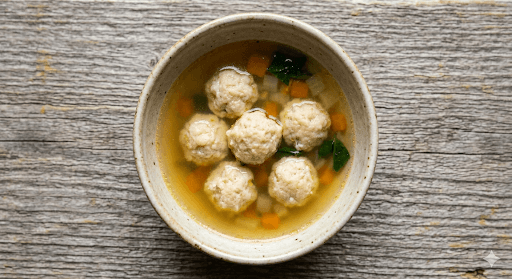
Ultra-soft udon noodles cut small, simmered with vegetables in a mild dashi broth. This is how Japanese babies transition to eating noodles - one of the first 'real meals' they enjoy.
Ingredients
- 50g dried udon noodles (or 100g fresh/frozen udon)
- 1 cup (240ml) dashi stock
- 1/4 carrot, finely diced
- 2 leaves komatsuna or spinach, finely chopped
- 1/2 teaspoon soy sauce (optional, very small amount)
- 20g soft tofu, cubed (optional)
Ingredient Substitutions
Can't find Japanese ingredients? Here are alternatives available at most supermarkets.
- Udon noodles → small pasta shapes (orzo, pastina, ditalini) cooked very soft
- Komatsuna → baby spinach, kale (stems removed), or broccoli florets
- Dashi → low-sodium chicken or vegetable broth
- Soy sauce → omit entirely for a salt-free version
Instructions
- 01Cook udon noodles according to package directions until very soft - overcooked by adult standards.
- 02Drain noodles and cut into 1-2cm lengths using kitchen scissors.
- 03In a separate pot, bring dashi stock to a simmer.
- 04Add diced carrot and cook for 5 minutes until soft.
- 05Add the cut noodles, chopped greens, and tofu (if using).
- 06Simmer everything together for 5 more minutes until all ingredients are very tender.
- 07Add a tiny amount of soy sauce if desired. Serve warm in a bowl.
Tips from a Dietitian Mom
- Cut noodles BEFORE putting them in the bowl - babies at this age are still learning to chew.
- Kitchen scissors are the easiest tool for cutting noodles quickly.
- Frozen udon is very convenient - it comes pre-cooked and just needs reheating and softening.
- At this stage, babies are practicing their pincer grasp. Slightly larger noodle pieces (2cm) let them practice self-feeding.
Storage & Freezing
Best served fresh. Cooked udon in broth can be refrigerated overnight. Noodles absorb broth during storage, so add a splash of water when reheating.
Nutrition Facts
Per serving (approximate)
Frequently Asked Questions
- When can babies eat udon noodles?
- In Japan, udon is typically introduced around 9 months when babies have mastered lumpier textures. Since udon contains wheat (gluten), make sure baby has already been introduced to wheat without allergic reaction before trying this recipe.
- How small should I cut the noodles?
- For 9-month-olds, cut into 1cm pieces. By 11 months, you can leave them at 2-3cm. Always supervise eating and ensure baby is sitting upright.
- Can I use somen or soba noodles instead?
- Somen (thin wheat noodles) can be used but break into short pieces before cooking. Avoid soba (buckwheat) until after 1 year as buckwheat is a common allergen in Japan.
Free Baby Food Starter Guide
Get our free PDF guide to starting solids the Japanese way, plus weekly recipes and nutrition tips for your little one.