
Why I Chose Food Over Medicine
I decided to become a registered dietitian when I was in high school.
At the time, I wanted to be a doctor. I wanted to help people get better. But a teacher changed the way I thought about that.
She told me: medicine treats people after they get sick. Food can stop them from getting sick in the first place.
That idea never left me.
Japan's healthcare system is under enormous pressure from lifestyle diseases - diabetes, hypertension, heart disease - conditions that are largely preventable, and that consume a significant share of the country's medical resources and tax spending. I kept asking myself: where is the most effective place to intervene? Where can one person make the biggest difference?
The answer, I came to believe, was childhood. Specifically, the school lunch table.
A child who learns to eat well - who grows up understanding what food does for their body, who develops a broad palate and a healthy relationship with eating - is far less likely to become a patient later in life. The job of a school nutrition teacher is to make that happen, one meal at a time, for hundreds of children, every day.
That's why I chose this path. Not because I gave up on helping people - but because I found a way to help them earlier.
What Is Kyushoku?
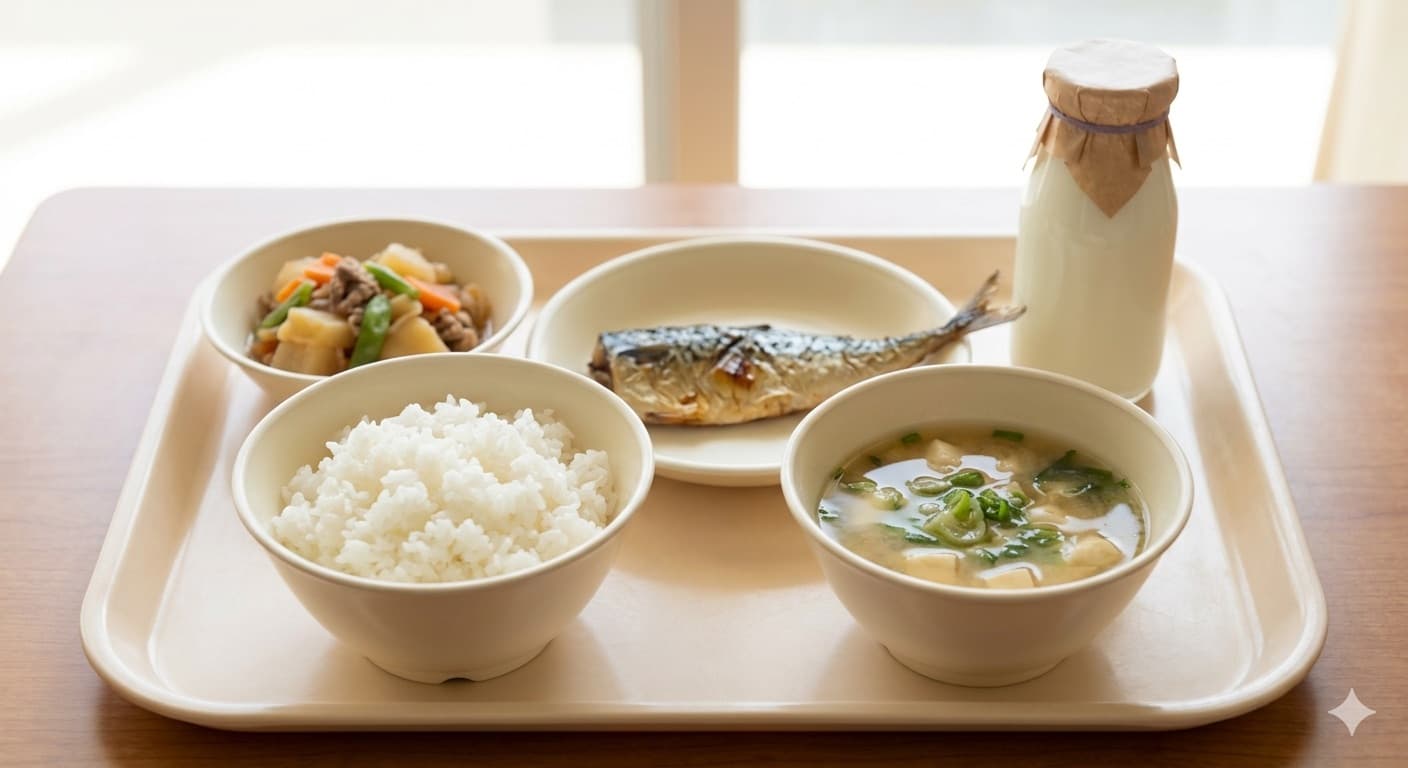
If you've ever seen a photo of a Japanese school lunch and thought "wait - kids actually eat that?", you're not alone. Neat trays, balanced portions, real fish, miso soup, and a room full of children eating together in their own classroom. It looks nothing like the cafeterias most of us grew up with.
I spent five and a half years as a nutrition teacher at a Japanese elementary school - planning menus, managing kitchens, and watching children develop their relationship with food every single day. Here's what kyushoku really is, from the inside.
The Menu: More Than Just Lunch
Every kyushoku menu is built around a simple framework: staple food, main dish, and side dish - the same three-part structure that anchors Japanese home cooking.
My job was to make sure every meal hit the right balance of carbohydrates, protein, fat, vitamins, and minerals - calculated precisely for each age group. But nutrition numbers were only half the work. The other half was making sure children actually wanted to eat it.
Vegetables were the biggest challenge. Kids everywhere resist vegetables - Japan is no different. So I developed ways to make them more appealing: varying the seasoning, changing the texture, pairing bitter greens with mild broths, using herbs and mild spices to add depth without overwhelming young palates. The goal was always to expand what children would willingly eat, not just what they were required to finish.
What a Real Kyushoku Tray Looks Like
These are actual meals I served at my school - photographed on the green school lunch trays.
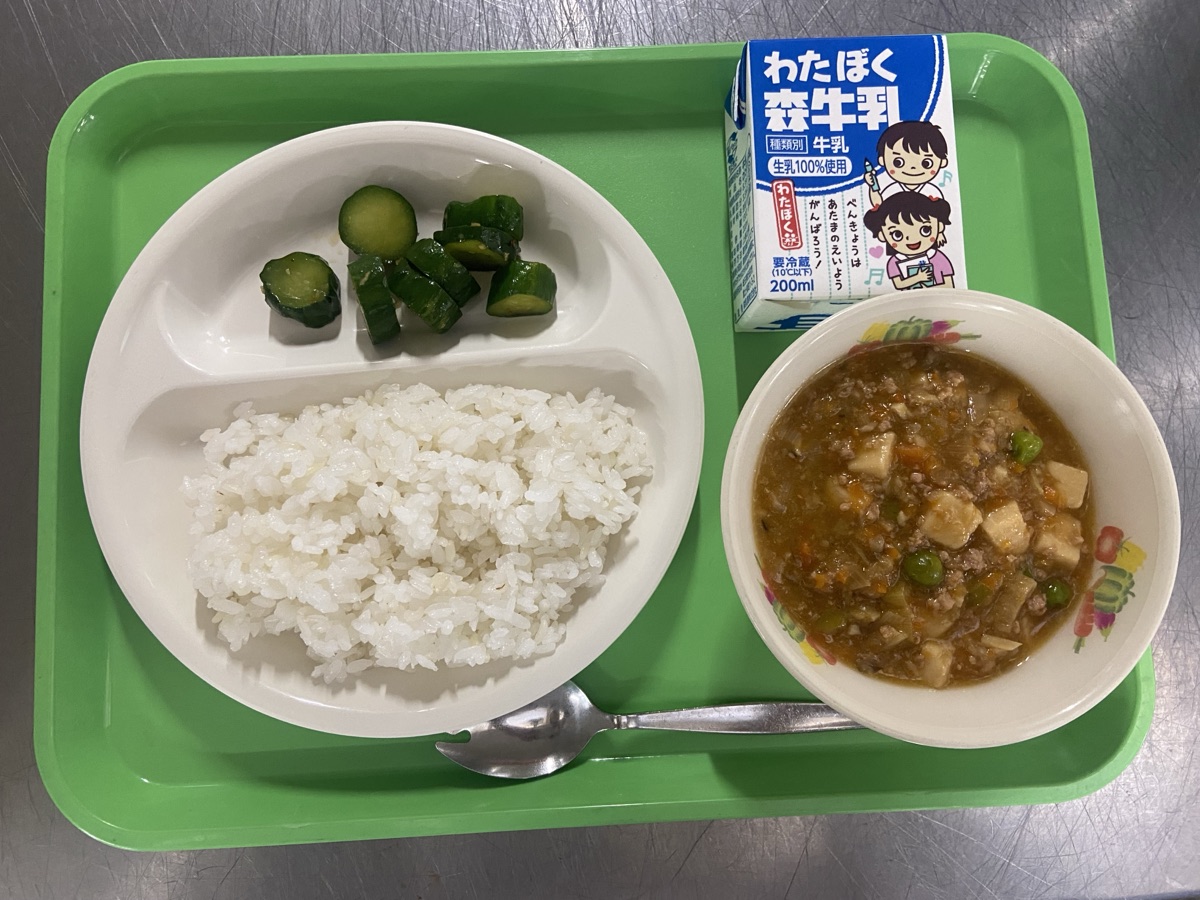 麻婆豆腐 (mapo tofu), Chinese cucumber salad, rice, and milk - a popular Chinese-inspired menu day
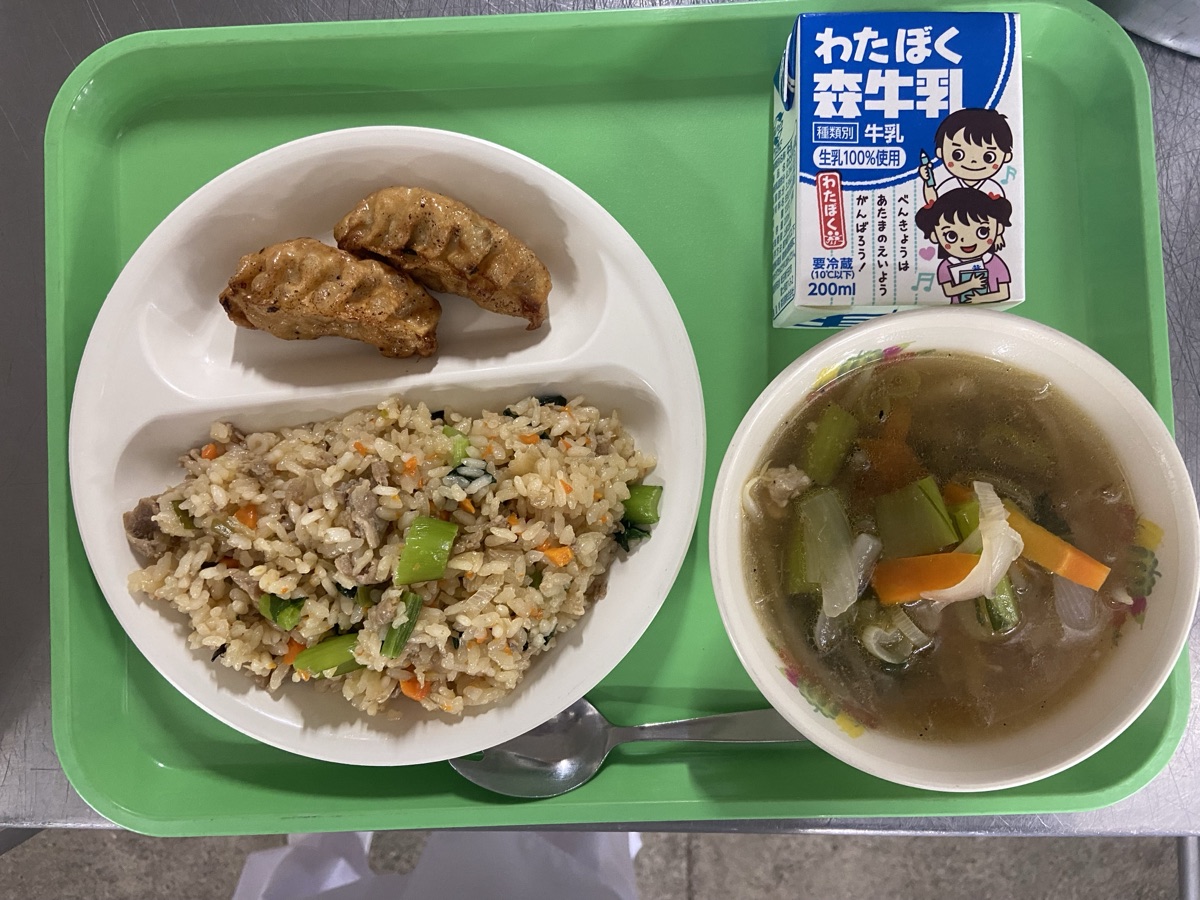 チャーハン (fried rice), 揚げ餃子 (pan-fried gyoza), Chinese vegetable soup, and milk
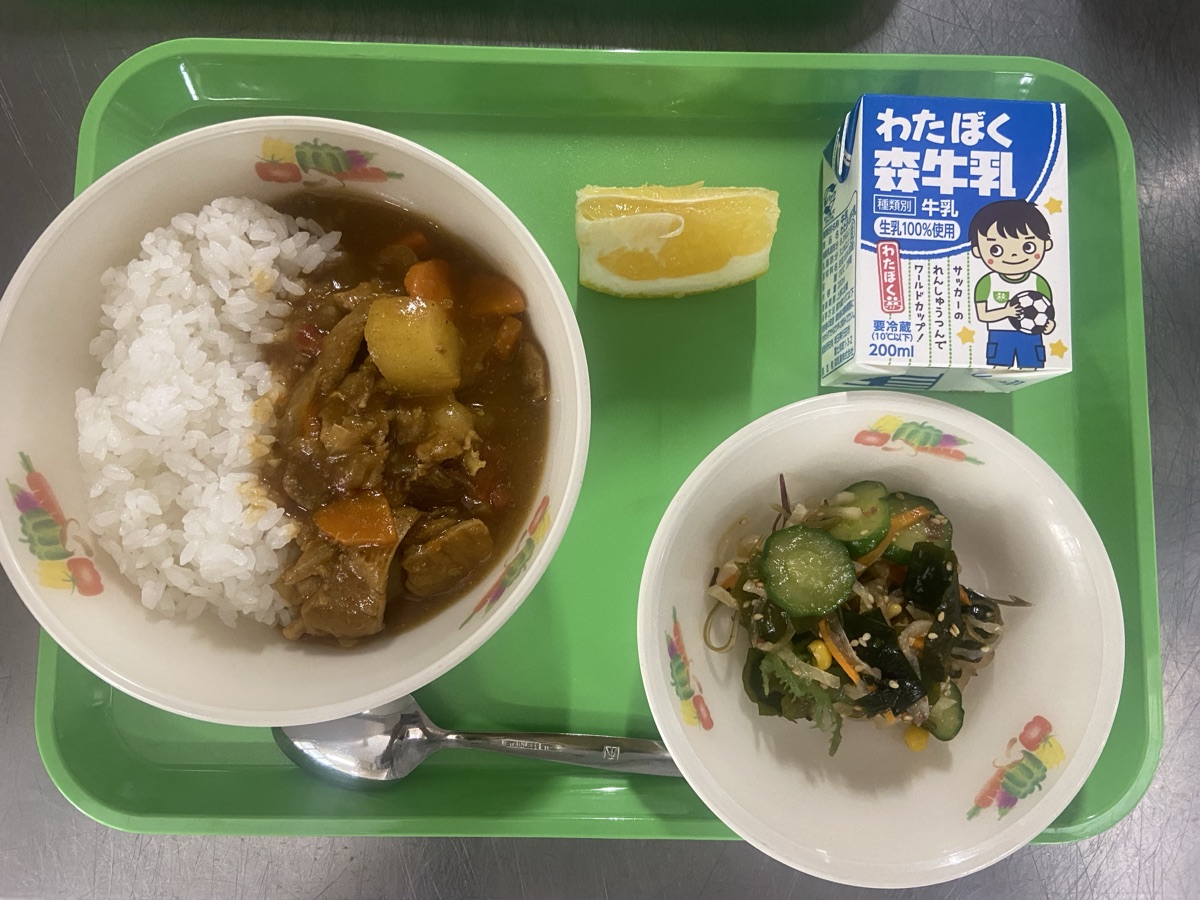 チキンカレー (chicken curry with rice), seaweed salad, 河内晩柑 citrus, and milk - curry day was always a favourite
The Meals Children Loved (And the Ones They Didn't)
Ask any Japanese adult about their favourite kyushoku memory and you'll likely hear one of these:
Curry rice - Japan's most-loved school lunch. A mild, thick curry perfectly calibrated for children. On curry days, even the slowest eaters cleaned their trays.
Age-pan - deep-fried bread rolled in sugar or kinako (roasted soybean flour). A nostalgic favourite that still appears on menus across Japan. When age-pan was on the menu, the classroom atmosphere changed.
Wakame gohan - rice mixed with seasoned seaweed. Simple, umami-rich, and deeply comforting.
The dishes that tended to come back to the kitchen? Mixed rice (maze gohan) and takikomi gohan - rice cooked with vegetables and other ingredients. Even when the flavour was good, many children struggled with unfamiliar textures mixed into their rice. I learned to introduce these dishes gradually, building familiarity over time.
Allergy Management: No Child Left Behind
Food allergies require serious attention in Japanese school kitchens. For any child with a documented allergy, the menu was adapted so that the allergen simply wasn't present in their meal - not removed at the last step, but absent from the cooking process entirely.
Separate preparation, separate cooking equipment, separate serving. Nothing was left to chance. Parents communicated allergies to the school in advance, and we worked from that information every single day.
What Kyushoku Looks Like in the Classroom
In Japan, there is no cafeteria. Children eat in their own classroom, at their own desks, with their teacher. A rotating group of students - the kyushoku toban (lunch duty team) - puts on white aprons, caps, and masks, then carries the food from the school kitchen and serves their classmates.
Each child receives a fixed portion. The toban has to estimate amounts carefully to make sure everyone gets an equal share. It sounds like a small thing. It teaches a great deal.
The atmosphere is warm and lively - cooperative, not competitive. Children help each other, pass dishes, and make sure everyone has what they need. And then, before anyone takes a bite:
"Itadakimasu"
Said together, at the same moment, to express gratitude - to the farmers, the cooks, the living things that became the meal. At the end:
"Gochisousama deshita"
These phrases are not a formality in Japanese schools. Teachers reinforce their meaning every day. Food is not just fuel. It is something to be received with care.
Why Kyushoku Matters Beyond Japan
Japan's school lunch system has attracted international attention - and for good reason. But what makes kyushoku unusual isn't just the nutrition. It's the philosophy embedded in every meal:
- Responsibility: children serve each other
- Gratitude: meals begin and end with intention
- Seasonality: menus change with the harvest
- Community: everyone - including the teacher - eats the same thing
These aren't extras. They are the point.
And for me, personally - they are the reason I spent five and a half years getting up early to plan menus, calculate nutrients, and make sure every child in that school had a lunch worth looking forward to.
Food is where health begins. I believe that now more than ever.
Special Event Lunches: Celebrating with Food
Not every school lunch is a standard menu day. A few times a year, we created something truly special - a meal designed to mark an important moment in a child's school life.
One of my favourites was the 進級お祝い給食 (grade promotion celebration lunch). When children moved up to a new school year, we made a handmade dessert: a layered jelly in red and white - Japan's traditional colours for celebration. The white base was set first, then a vivid red jelly was poured on top and shaped with star moulds. We made hundreds of individual cups by hand.
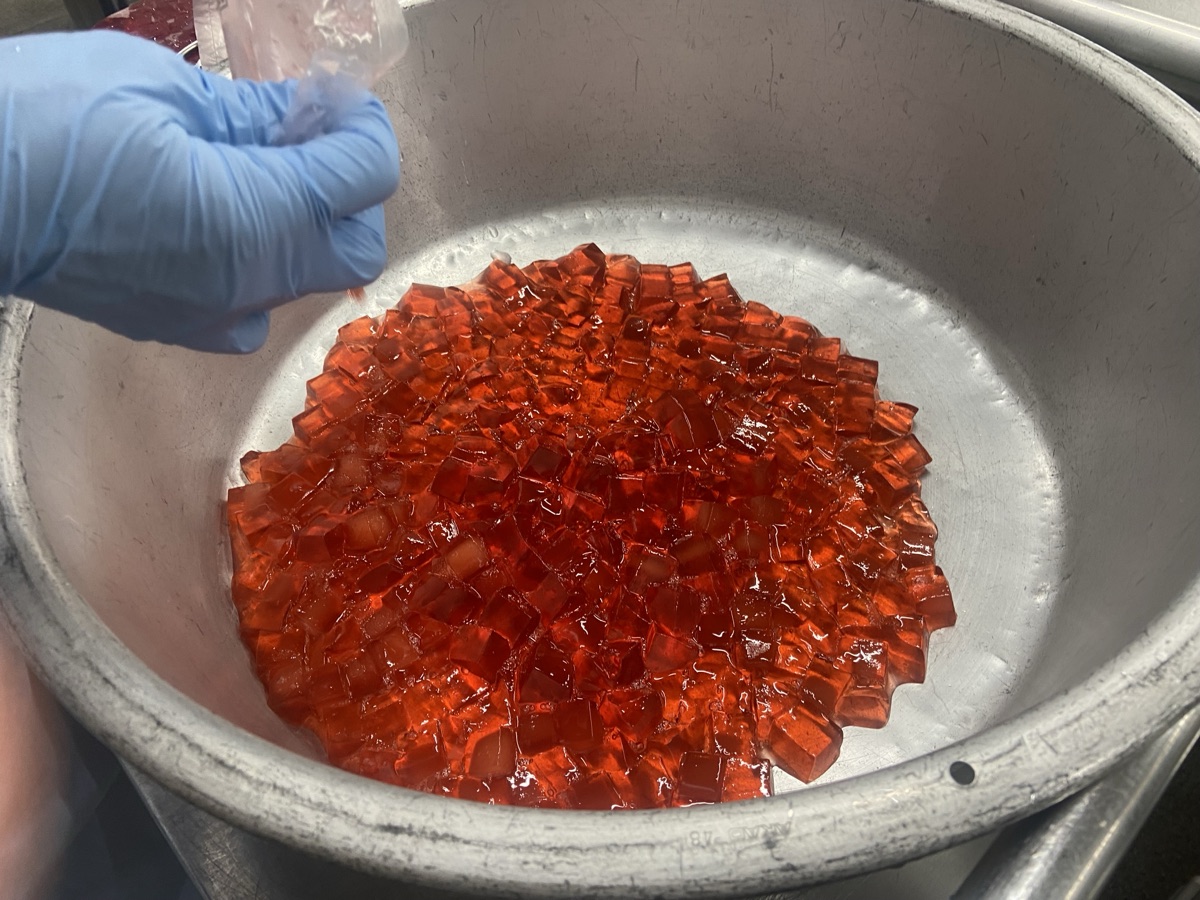 Preparing the red celebration jelly in the school kitchen - made entirely from scratch
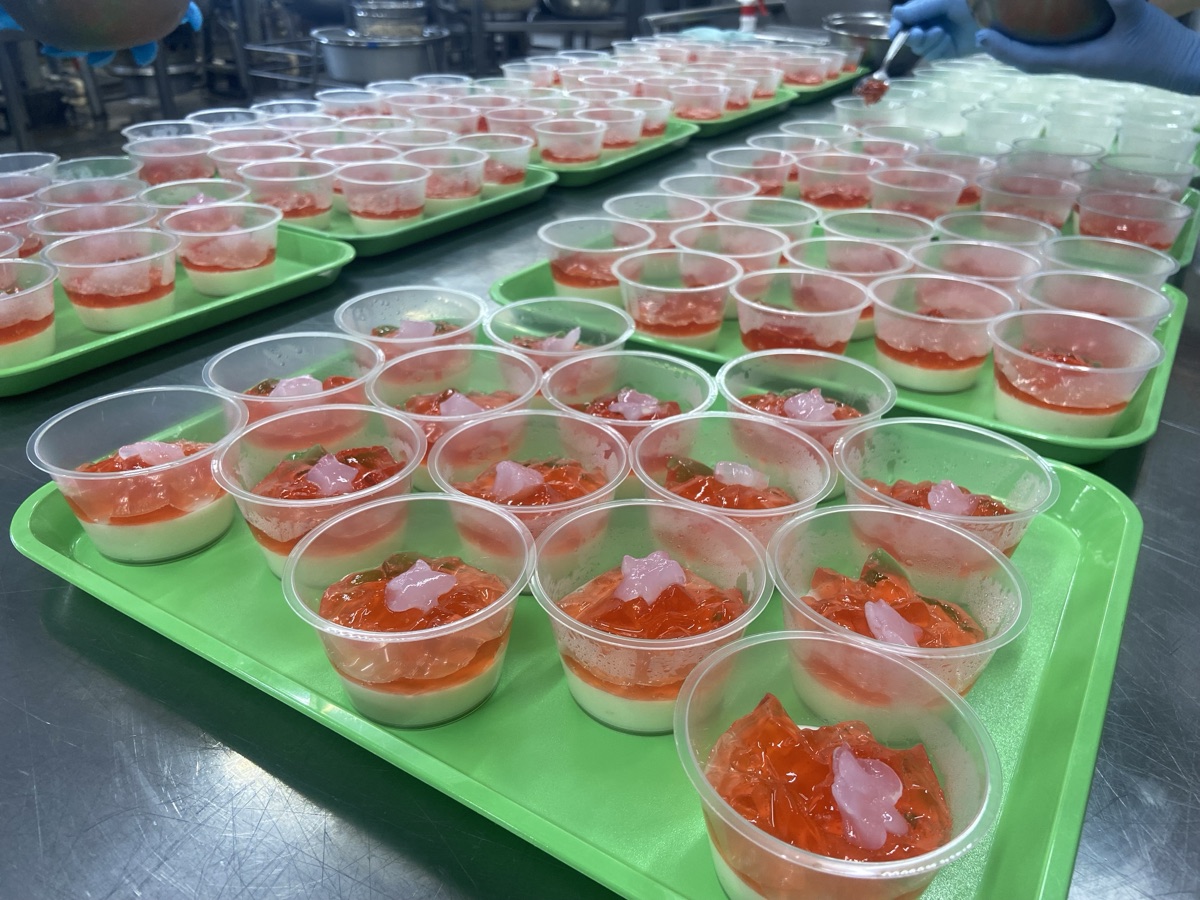 Each cup individually prepared - white base with red jelly and star decorations, for every child in the school
The full celebration menu on that day was:
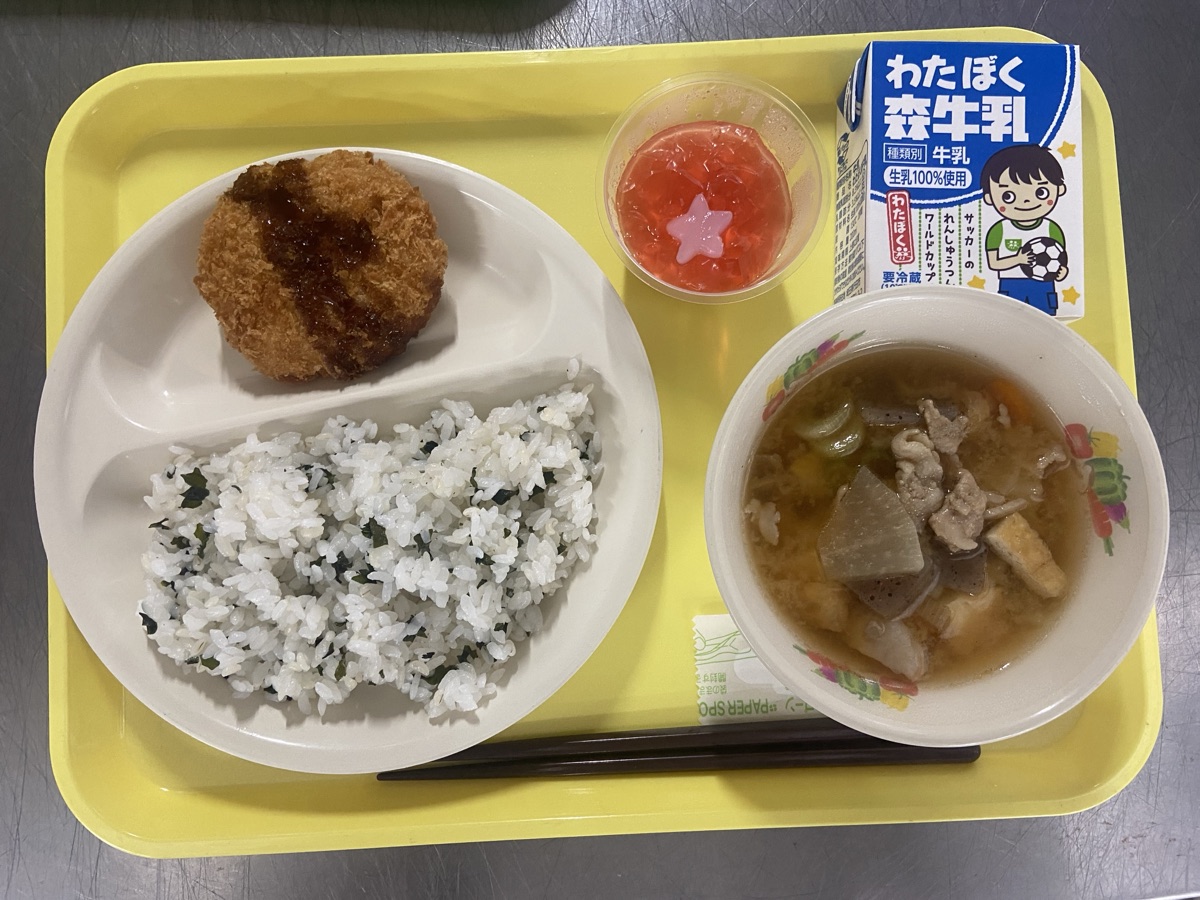 菜飯 (herb rice), メンチカツ (ground meat cutlet), けんちん汁 (root vegetable soup), handmade 進級お祝いゼリー, and milk
These days remind me why school lunch is never just about nutrition. It is about memory, belonging, and the feeling that someone made something special for you.
Try a Kyushoku Recipe at Home
The recipes on JapanDish are adapted from real school lunch dishes - the kind I planned and served at school. They're made for home kitchens, with ingredients you can find outside Japan.
Yumi is a registered dietitian and certified school nutrition teacher with 7.5 years of experience planning school lunches in Japan.
Sources:
- Ministry of Education, Culture, Sports, Science and Technology (MEXT), "School Lunch Act," Japan, 1954 (revised 2008)
- Cabinet Office, Japan, "Basic Law on Shokuiku," 2005
- Miyawaki A. et al., "Impact of the school lunch program on overweight and obesity among Japanese children," Journal of Public Health, 2019
- MEXT, "Survey on the Status of School Lunches," 2023
- UNESCO, "Washoku, traditional dietary cultures of the Japanese," Intangible Cultural Heritage list, 2013