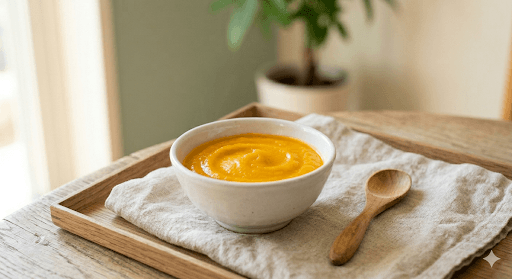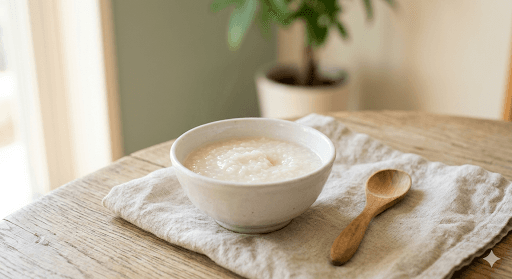
10-Bai Gayu (10x Rice Porridge for First Foods)
In Japan, nearly every baby's first food is okayu - rice porridge. The tradition goes back centuries: plain, gentle rice porridge is considered the safest and most digestible first food. Japanese pediatricians recommend starting with 10-bai gayu (10 parts water to 1 part rice) at around 5 months, then gradually thickening it as the baby develops. This careful, staged approach to introducing solids is a hallmark of Japanese weaning philosophy, where each texture progression is deliberate and mindful.
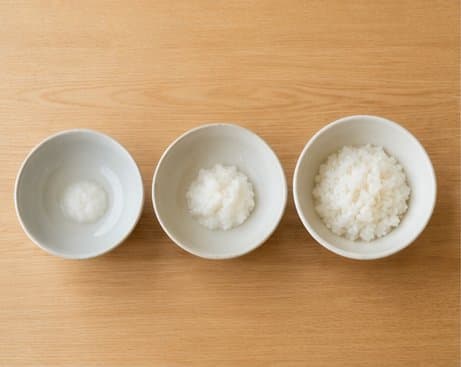
The very first food for Japanese babies - a silky smooth rice porridge made with just rice and water. This 10-bai gayu (10:1 water to rice ratio) is the traditional starting point for solids in Japan.
Ingredients
- 2 tablespoons (30g) Japanese short-grain rice
- 1.5 cups (300ml) water
Ingredient Substitutions
Can't find Japanese ingredients? Here are alternatives available at most supermarkets.
- Japanese short-grain rice → Calrose rice (widely available in US), or any short-grain/sushi rice
- If short-grain rice is unavailable, medium-grain rice works but the texture will be slightly less creamy
Instructions
- 01Rinse the rice gently in a fine-mesh sieve until the water runs clear.
- 02Combine rice and water in a small heavy-bottomed pot. Let it soak for 30 minutes if time allows.
- 03Bring to a boil over medium heat, then reduce to the lowest setting. Cover with a lid slightly ajar.
- 04Simmer for 30-40 minutes, stirring occasionally to prevent sticking.
- 05The rice should be completely broken down and the porridge very watery.
- 06Press through a fine sieve or blend until perfectly smooth with no lumps.
- 07Serve 1-2 teaspoons at body temperature for baby's first feeding.
Tips from a Dietitian Mom
- For the very first feeding, make it extra smooth by straining through a tea strainer.
- Japanese moms often make a batch and freeze in ice cube trays - each cube is roughly one portion.
- As a registered dietitian, I recommend starting with just one teaspoon on day one and gradually increasing.
- Use Japanese short-grain rice if possible - it creates a naturally creamier texture than long-grain varieties.
Storage & Freezing
Refrigerate for up to 24 hours. Freeze in ice cube trays for up to 2 weeks. Thaw in the refrigerator or microwave, and always check temperature before serving.
Nutrition Facts
Per serving (approximate)
Frequently Asked Questions
- When should I start giving my baby okayu?
- In Japan, pediatricians recommend starting solids around 5-6 months when baby shows signs of readiness: holding head steady, showing interest in food, and loss of the tongue-thrust reflex. Always consult your pediatrician before starting.
- What is the difference between 10-bai gayu and 7-bai gayu?
- 10-bai gayu uses a 10:1 water-to-rice ratio and is very thin - perfect for 5-6 month olds just starting solids. 7-bai gayu (7:1 ratio) is thicker and suitable for 7-8 month olds who have gotten used to eating.
- Can I use a rice cooker to make baby okayu?
- Yes! Many Japanese rice cookers have an okayu setting. Use the same ratio of rice to water. The rice cooker method is very convenient for busy parents.
Free Baby Food Starter Guide
Get our free PDF guide to starting solids the Japanese way, plus weekly recipes and nutrition tips for your little one.