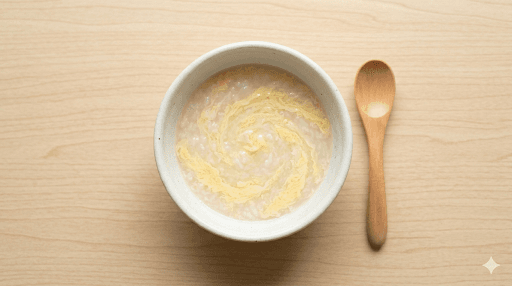
Tamago-Gayu (Egg and Rice Porridge)
Allergen Information
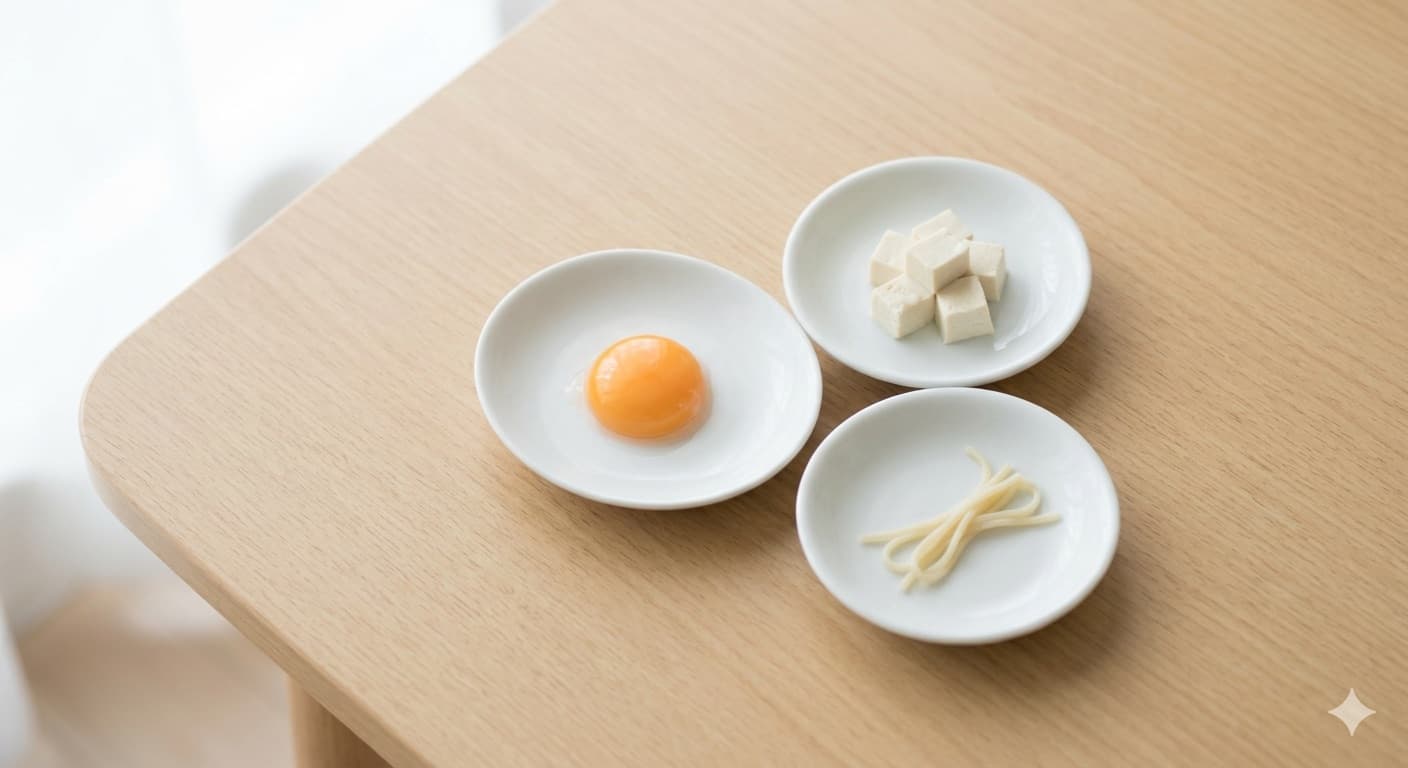
Tamago-gayu (egg rice porridge) is a beloved comfort food in Japan served to the sick, the elderly, and babies alike. Egg is typically introduced to Japanese babies around 7-8 months, starting with just the yolk before progressing to the full egg. Swirling a beaten egg into hot porridge creates a silky, cloudy texture that is far easier for babies to manage than scrambled eggs. This method - called 'tamago toji' (egg-binding) - is used throughout Japanese cooking and produces a gentle, custard-like egg that melts into the rice. As a first egg experience, tamago-gayu is beloved by Japanese mothers for its reliability.
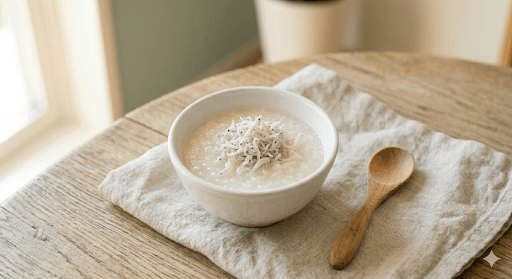
Silky 7-bai gayu rice porridge swirled with beaten egg - a warm, nourishing meal that introduces egg protein in the most gentle, traditional Japanese way.
Ingredients
- 3 tablespoons (45g) Japanese short-grain rice
- 1.5 cups (315ml) water (7:1 ratio)
- 1 egg yolk (for first introduction) or 1 whole egg (after egg yolk is accepted)
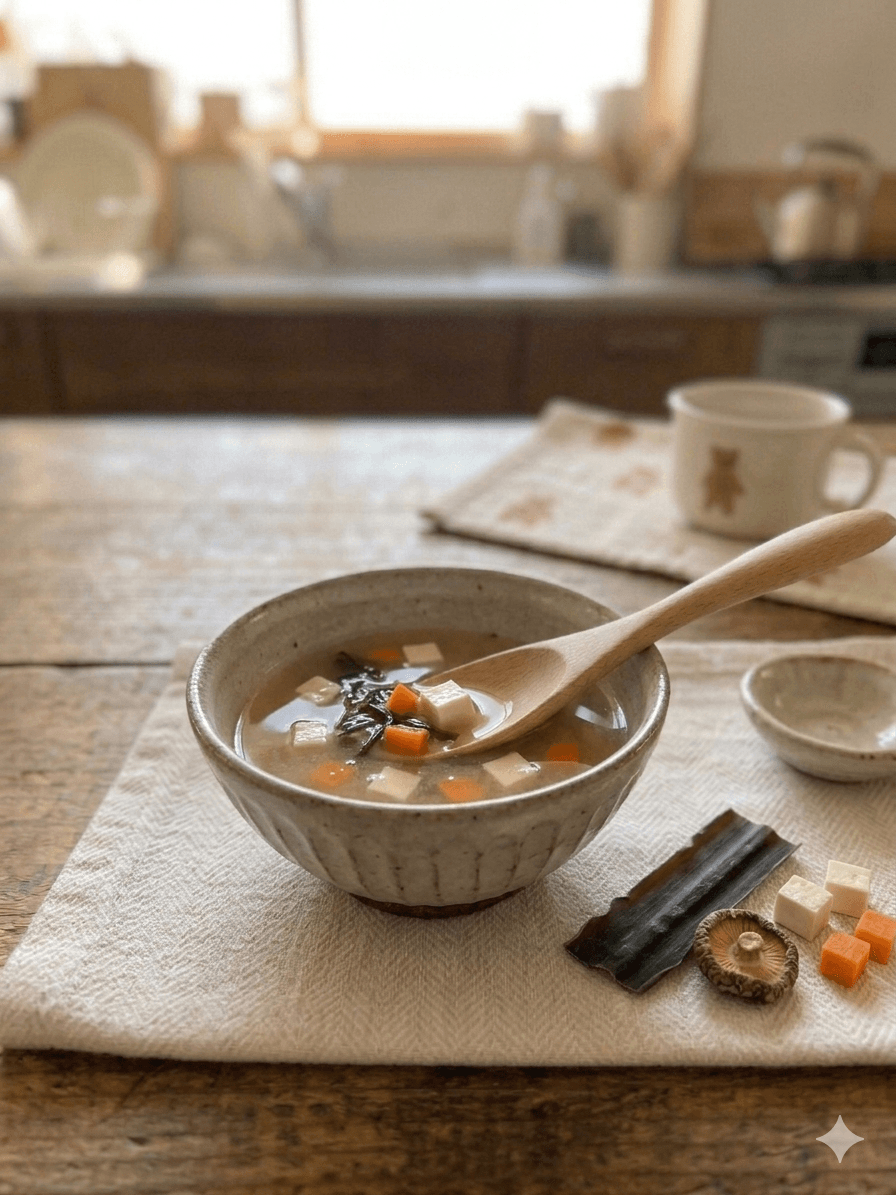
- 1-2 tablespoons kombu dashi or water
Ingredient Substitutions
Can't find Japanese ingredients? Here are alternatives available at most supermarkets.
- Egg → 1 tablespoon silken tofu mashed in for an egg-free protein boost
- Kombu dashi → plain water works perfectly
- Short-grain rice → Calrose rice or any sushi rice
Instructions
- 01Rinse rice and combine with water. Soak 30 minutes if possible.
- 02Bring to a boil, then reduce to lowest heat. Cover with lid slightly ajar and simmer 25-30 minutes.
- 03Beat the egg (or yolk) with 1-2 tablespoons of dashi until well combined.
- 04When porridge is ready, increase heat briefly to bring back to a gentle simmer.
- 05Drizzle the beaten egg in a thin stream while stirring constantly in one direction.
- 06Turn off heat immediately and cover for 1 minute - the residual heat finishes cooking the egg.
- 07Stir gently and serve at body temperature. The egg should be fully cooked through, not runny.
Tips from a Dietitian Mom
- Always start with just egg yolk when introducing egg for the first time. Egg white is introduced later.
- The egg must be fully cooked for food safety - no runny or soft-set egg for babies.
- Adding the egg off the direct heat in a thin stream creates a silky texture rather than rubbery curds.
- As a dietitian, I love that egg yolk is rich in choline - essential for brain development.
Storage & Freezing
Best eaten immediately after cooking. Rice porridge can be made ahead and refrigerated for 24 hours, but add the egg only when reheating. Reheat gently with a splash of water, stir the fresh egg in, and cook through.
Nutrition Facts
Per serving (approximate)
Frequently Asked Questions
- Why start with only the egg yolk?
- Egg white contains proteins that are more likely to cause allergic reactions than egg yolk. Japanese guidelines suggest introducing the yolk first (around 7-8 months), then gradually introducing the white only after the yolk is accepted without reaction.
- How much egg should I use for baby's first introduction?
- Start with just a very small amount of hard-boiled egg yolk - about 1/6 of a yolk mixed into porridge. Increase gradually over 1-2 weeks. This cautious approach helps identify any allergic reaction clearly.
- My porridge turned lumpy with the egg. What went wrong?
- The egg was likely added when the porridge was too hot, or stirred too vigorously. Reduce heat to the lowest setting, drizzle the egg very slowly in a thin stream while stirring gently. The result should be wispy, silky threads of egg.
Free Baby Food Starter Guide
Get our free PDF guide to starting solids the Japanese way, plus weekly recipes and nutrition tips for your little one.