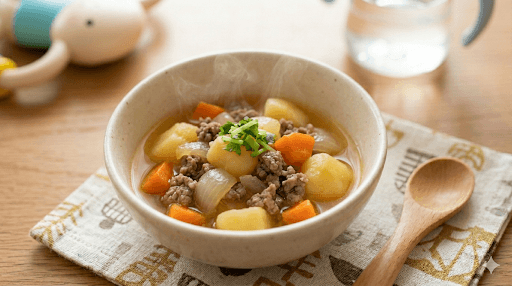
Baby Nikujaga (Potato and Beef Stew)
Allergen Information
Nikujaga (literally 'meat-potato') is Japan's quintessential home-cooked dish, often cited as the food Japanese people miss most when abroad. Originally inspired by British beef stew introduced by the Navy in the Meiji era, nikujaga was quickly Japanified with soy sauce, mirin, and dashi. It is the ultimate 'ofukuro no aji' (taste of mother's cooking) - every Japanese child grows up eating their mother's version. For toddlers, the standard recipe needs only minor adjustments: smaller cuts, softer cooking, and slightly less soy sauce. Sharing nikujaga with a toddler is a quiet milestone in Japanese family life.
Japan's beloved 'meat and potato' stew, gently adapted for toddlers - tender beef, creamy potato, and sweet onion simmered in a mild dashi-soy sauce. A taste of home cooking every Japanese child knows.
Ingredients
- 60g thinly sliced beef (sukiyaki-style), cut into 1cm pieces
- 1 medium potato, peeled and cut into small cubes
- 1/4 onion, thinly sliced
- 1/4 carrot, cut into small pieces
- 2/3 cup (160ml) dashi stock
- 1.5 teaspoons soy sauce
- 1 teaspoon mirin
- 1/2 teaspoon sugar
Ingredient Substitutions
Can't find Japanese ingredients? Here are alternatives available at most supermarkets.
- Thinly sliced beef → ground beef (cooked separately and added) or chicken thigh cut thin
- Soy sauce → tamari for a gluten-free option
- Mirin → 1/2 teaspoon sugar + 1 teaspoon water
- Dashi → low-sodium beef or chicken broth
Instructions
- 01Bring dashi stock, soy sauce, mirin, and sugar to a simmer in a small pot.
- 02Add the onion and cook for 2 minutes until softened.
- 03Add the beef pieces, separating any that stick together. Cook until no longer pink.
- 04Add potato and carrot. The liquid should just barely cover the vegetables - add a splash of water if needed.
- 05Bring to a gentle boil, then reduce heat to low. Cover and simmer for 20-25 minutes until potatoes are very tender.
- 06Check that potato is soft enough to crush easily between fingers.
- 07Serve with rice. Offer a small portion and let toddler self-feed or assist with a spoon.
Tips from a Dietitian Mom
- Sukiyaki-cut beef (very thin slices) is key to tenderness - it cooks quickly and becomes very soft.
- The potato should be extra soft for toddlers - test by pressing between your fingers. If any resistance remains, cook longer.
- Use only 1.5 teaspoons of soy sauce compared to adult nikujaga (which uses 2-3 tablespoons) to keep sodium low.
- Make a large batch of adult nikujaga and set aside a portion before adding full seasoning for baby.
Storage & Freezing
Nikujaga improves with time - make ahead and refrigerate for up to 2 days. Reheat gently on the stove with a splash of water. Freeze for up to 1 month. Potatoes become slightly grainy when frozen - this is normal and does not affect flavor.
Nutrition Facts
Per serving (approximate)
Frequently Asked Questions
- What cut of beef is best for nikujaga?
- Sukiyaki-cut beef (paper-thin slices) is traditional and ideal - it becomes very tender quickly. You can find this pre-cut at Japanese and Korean grocery stores. Alternatively, ask your butcher to slice ribeye or sirloin very thinly, or freeze a piece of beef for 30 minutes and slice it thinly yourself.
- Why is nikujaga considered the ultimate Japanese home food?
- Nikujaga has deep emotional resonance in Japan - surveys consistently rank it as the dish people most associate with their mothers' cooking. Its simple, warming combination of sweet and savory flavors feels like a hug in a bowl. Sharing it with your own toddler is continuing a beautiful tradition.
- Can I make a vegetarian version?
- Yes - replace beef with firm tofu or thick-cut shiitake mushrooms. The dashi and soy sauce create enough umami that the dish is still deeply satisfying without meat.
Free Baby Food Starter Guide
Get our free PDF guide to starting solids the Japanese way, plus weekly recipes and nutrition tips for your little one.