Kabocha Squash Puree (Japanese Pumpkin)
Kabocha (Japanese pumpkin) holds a special place in Japanese cuisine and baby food alike. Its deep orange flesh is sweeter and creamier than Western pumpkins, making it an ideal first vegetable. Japanese mothers often introduce kabocha around 5-6 months because its natural sweetness helps babies accept vegetables willingly. The tradition of giving babies kabocha puree in autumn - when the squash is at its peak - is a seasonal ritual in many Japanese families. Unlike carrot purees, kabocha has a buttery richness that makes babies reach for the spoon.
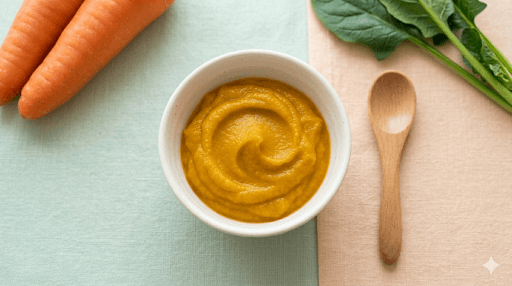
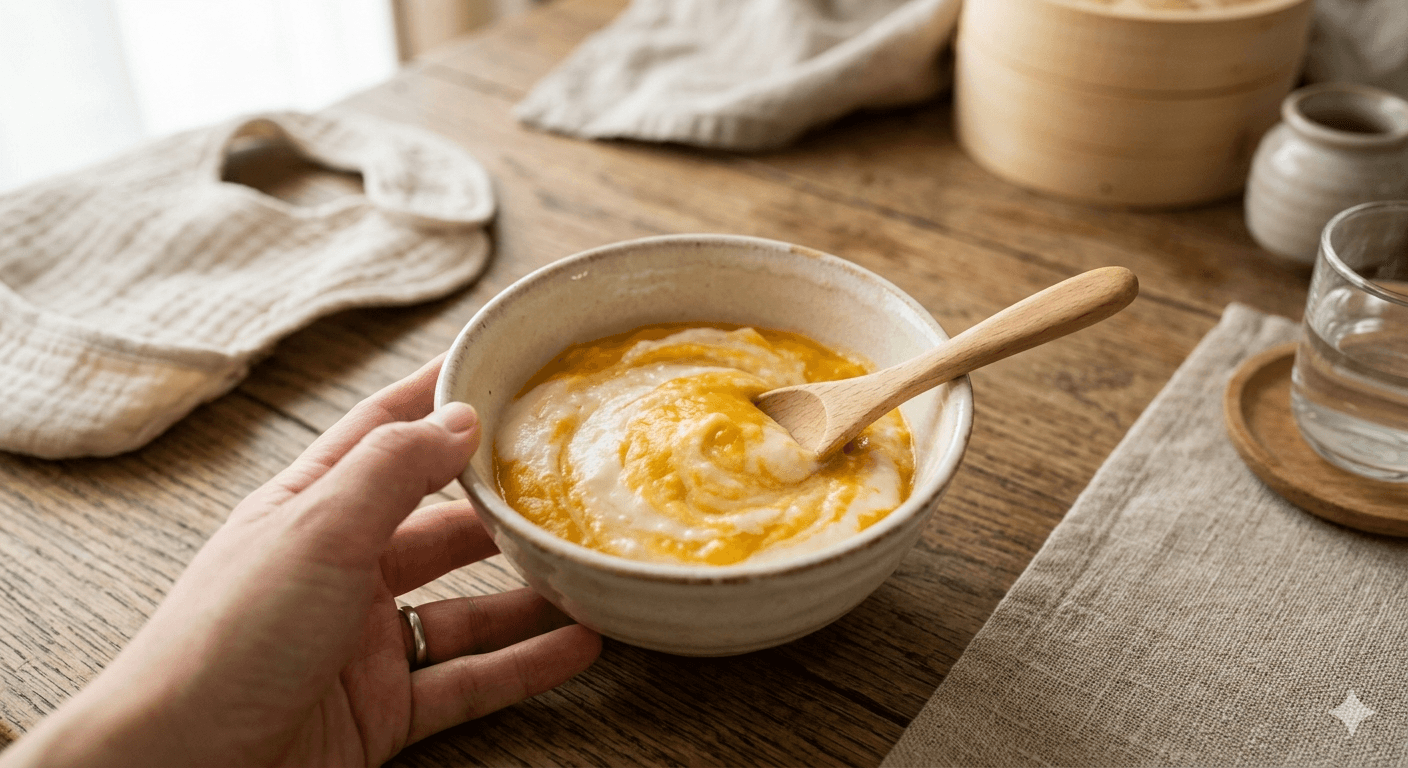
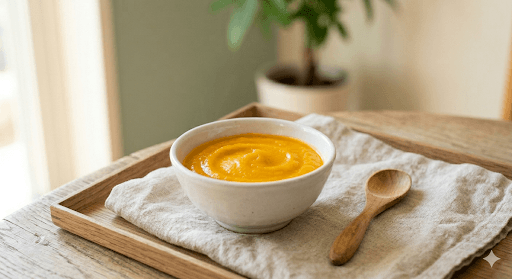
Velvety smooth kabocha squash puree - one of the most beloved first vegetable foods in Japan. Naturally sweet and rich in beta-carotene, babies love the gentle flavor.
Ingredients
- 100g kabocha squash (Japanese pumpkin), seeds and skin removed
- 3-4 tablespoons water or kombu dashi
Ingredient Substitutions
Can't find Japanese ingredients? Here are alternatives available at most supermarkets.
- Kabocha → butternut squash or any winter squash (kabocha is sweeter and creamier)
- Water → kombu dashi for a subtle umami boost
- For extra creaminess → blend with a small amount of silken tofu
Instructions
- 01Cut kabocha into small chunks, removing all skin and seeds.
- 02Steam or microwave until very soft - a fork should pass through without resistance (10-15 min steam, 4-5 min microwave).
- 03Transfer to a blender or food processor while still warm.
- 04Add water or dashi gradually and blend until completely smooth.
- 05Pass through a fine sieve for extra silkiness - especially important for 5-month-olds.
- 06Cool to body temperature before serving.
Tips from a Dietitian Mom
- Kabocha skin is very hard - use a sturdy knife and cut carefully. Steaming first softens it if removing raw skin is difficult.
- Freeze in ice cube trays immediately after cooking. One cube is the perfect single serving.
- The natural sweetness means no flavoring is needed. Let baby experience the pure vegetable taste.
- As a dietitian, I recommend kabocha as one of the best first vegetables - it is rich in beta-carotene, potassium, and vitamin C.
Storage & Freezing
Refrigerate for up to 24 hours. Freeze in ice cube trays for up to 2 weeks. Thaw in refrigerator overnight or microwave briefly, stir well and check temperature before serving.
Nutrition Facts
Per serving (approximate)
Frequently Asked Questions
- Is kabocha different from regular pumpkin?
- Yes - kabocha (Japanese pumpkin) has a much denser, creamier texture and sweeter flavor than Western pumpkins. Its flesh is almost like a cross between pumpkin and sweet potato. You can find it at Asian grocery stores year-round.
- Can I use canned pumpkin instead?
- Plain canned pumpkin puree (100% pumpkin, no added sugar or spices) can be used as a shortcut. However, kabocha has a superior flavor and texture for babies. If using canned, just thin it with a little water or dashi.
- Should I add any seasoning?
- No - at 5-6 months, babies should experience pure vegetable flavors without any added salt, sugar, or spices. The natural sweetness of kabocha is more than enough.
Free Baby Food Starter Guide
Get our free PDF guide to starting solids the Japanese way, plus weekly recipes and nutrition tips for your little one.